
National strategy urgently needed to support rising numbers of older prisoners
A new report, published today by the Prison Reform Trust, calls on the Ministry of Justice to publish a national strategy for the care and management of older prisoners as a matter of urgency.

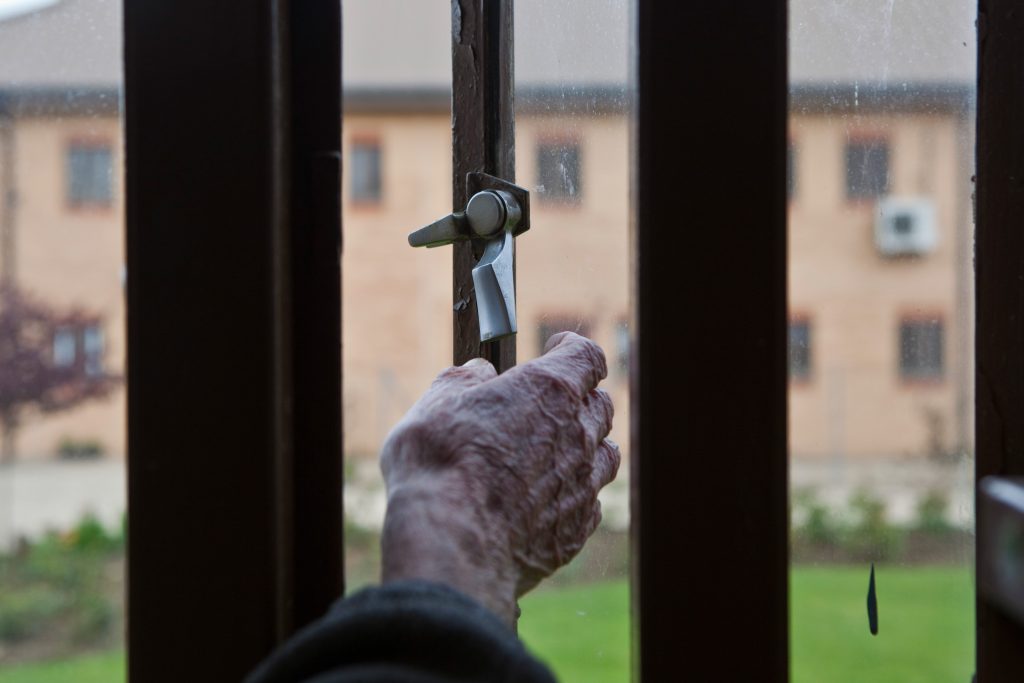
More than three and a half years have passed since a strategy was first promised by the last government in response to a House of Commons Justice Committee inquiry on the ageing prison population. The delay now means that the new government is inheriting a significant challenge. However, it also provides an opportunity to correct this and to set a new strategic focus.
In just 20 years the number of people in prison aged 50 or over has nearly trebled, rising from around 5,000 in 2003 to almost 15,000 in 2023. They currently account for around one in six people currently in prison (17%).
The report, by Dr Jayne Price, forms part of the Prison Reform Trust’s National Lottery Community Fund funded Building Futures Programme that, since 2020, has been exploring the experiences of people serving long-term prison sentences.
Based on consultation with 121 men and women aged 50 and over serving these sentences in 39 prisons in the UK, it provides insights into their experience of being older and in prison, as well as proposals to ensure that their views are considered as part of the development of an older prisoners’ strategy.
The report reveals some of the distinct challenges faced by older people in prison. These include the disconnect between activities aimed at reducing reoffending and preparing for a life after release, whilst simultaneously facing the prospect of their own death in prison; their desire to regain purpose and to support younger prisoners; and the importance of dignity when faced with growing health and social care needs.
“I have no home, no pension and no employment hopes (I will be retired upon release). My circle of friends on the outside is now virtually non-existent, there is a possibility that the few left might be in ‘homes’ or even dead because they are older than me. But that is made on the assumption that I will even leave prison alive! A very sobering thought, isn’t it?”
Older prisoner
“Rewarding poor behaviour seems to be popular in so many prisons. Specialists should work with [older prisoner] mentors in an effort to encourage the young to strive for a better future. Many of us seniors would welcome a chance to make a difference.”
Older prisoner
Prisoners also echoed the repeated concerns raised by the Prisons and Probation Ombudsman about the inappropriate use of restraints during hospital visits.
“I was double handcuffed and handcuffed to an officer whilst on the operating table for a cataract operation. Many [older prisoners] are similar to myself and have no history of violence or the ability to escape—especially with only one lens while the other has been removed and is about to be replaced.”
Older prisoner
The report also highlights existing areas of good practice, which a future strategy should build on, with adaptations that could be replicated across the estate. This includes support for the growing numbers of older prisoners with dementia. At one prison, HMP Watton, specific dementia cells with clear signage had been provided and a range of services had been developed for older prisoners in conjunction with Age UK.
Commenting, Pia Sinha, chief executive of the Prison Reform Trust said:
“With one in six people in prison now aged 50 or over, there is a growing urgency for our prisons to adapt. The last government accepted the need for an older prisoners’ strategy more than three-and-a-half years ago, but failed to deliver one. This sobering report highlights the continuing indignity, absence of hope, and lack of opportunities to contribute positively to prison life for many older prisoners.
“When so much resource is being dedicated to getting through the current crisis in prison capacity, and no clear plan on how to successfully manage the growing number of older people behind bars, this report provides a vital insight of the human costs, and how the government can begin to put things right.”
