
IPP reform – a case study in achieving change
In this blog, PRT’s deputy director Mark Day considers lessons from the campaign on the Victims and Prisoners Act 2024 to reform the IPP licence.
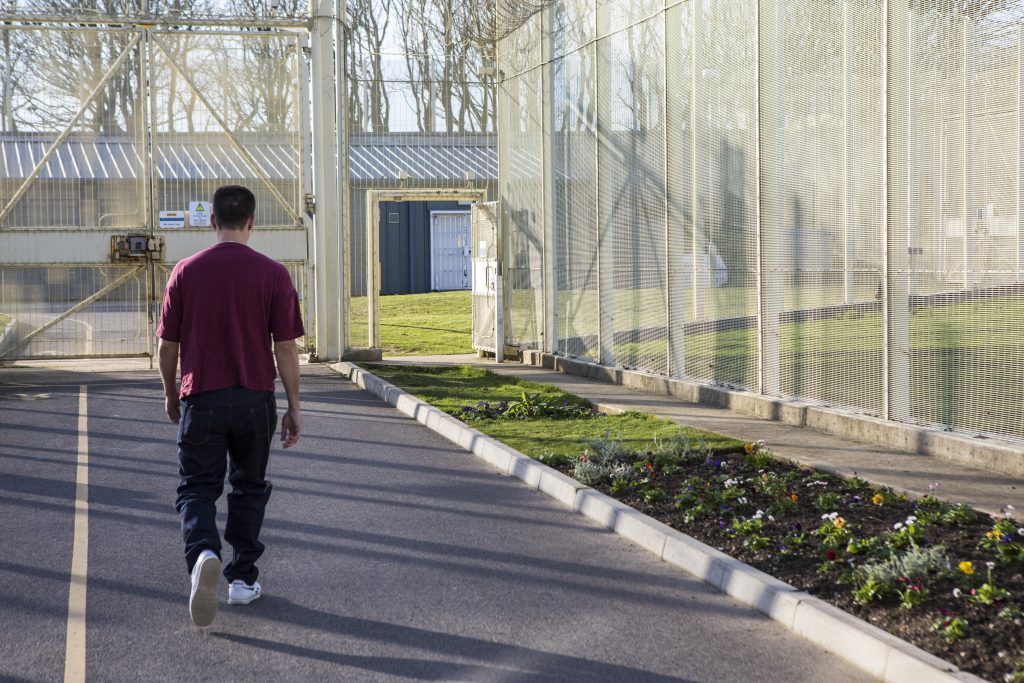
The beginning of November saw welcome progress in the ongoing campaign to reform the sentence of Imprisonment for Public Protection (IPP), described by the former Supreme Court justice Lord Brown as “the greatest stain on the criminal justice system.” On 1 November 2024 around 1,800 people serving IPPs in the community had their licences cancelled when provision to automatically terminate an IPP licence contained in the Victims and Prisoners Act 2024 was brought into effect.
Other provisions in the Act relating to IPPs which were commenced on the same date include:
- A reduction in the qualifying period from 10 to three years for people sentenced as adults to IPPs (this provision came partially into force on 1 November 2024 for the purposes of automatic licence termination and will be fully implemented on 1 February 2025).
- An equivalent reduction in the qualifying period from 10 to two years for people sentenced as children to Detention for Public Protection (the equivalent of an IPP sentence for juveniles).
- A statutory presumption that the IPP licence will be terminated by the Parole Board at the end of the qualifying period.
- A new power of executive release for IPP prisoners who have been recalled.
- A new power for the government to dismiss an IPP recall for the purposes of the new arrangements introduced by the Act for the termination of an IPP licence.
- A requirement for the government to produce an annual report to be laid before Parliament on the steps it has taken to progress the release and licence termination of people on IPPs.
Attempts to amend the legislation during its parliamentary stages to include the principal recommendation of the House of Commons Justice Committee report on IPPs, that a resentencing of IPP prisoners should be undertaken, were unsuccessful. Following the general election, a new private members’ bill on the resentencing of people serving IPPs was introduced and had its first substantive debate in the House of Lords on 15 November 2024. However, the new government has said that it is also not supportive of a resentencing exercise and will not back the bill. Practically, this means that it has little chance of making it into law.
Much more could and should be done to provide better support to and progress the release of those 1,200 IPP prisoners who have never been released, and who remain stuck in the system. In this new parliament, it will be vital to continue to keep the pressure on ministers to hold them to account for delivery against the IPP action plan and introduce further measures to improve sentence progression and prospects for safe release.
Nonetheless, the provisions which were introduced by the Victims and Prisoners Act will make a real difference to people serving an IPP sentence on licence in the community and those recalled to custody. In this blog, I aim to provide an explanation of how these reforms came about, and to draw out the lessons from the campaign on the legislation. In some respects, IPPs are a special case about correcting an injustice. As such, the issue has the power to draw in non-specialist legislators and commentators in a way that other important matters of penal reform do not. This may limit its applicability to other campaigns in the sector. Nonetheless, it was a rare example of progressive reform proceeding to legislation. My account is unavoidably partial, and any errors or omissions are my own.
The experiences and needs of people with lived experience should be front and centre
The campaign on the bill was guided by the principles of listening to people on IPPs and their families about their experiences and concerns; and working towards realistic changes in policy and legislation that would make a practical and positive difference. Working with groups such as UNGRIPP, as well as listening to the evidence PRT gained through its advice and information service, was vital to ensure that the policies for which we were advocating reflected the lived experience of those affected by the sentence. This involved a careful and sometimes difficult balance between campaigning for the ideal change and working towards less ambitious reforms which were more politically achievable. However, being guided by what people on IPPs were telling us at all times, we could be confident that the changes were advocating for would have a positive impact.
Build an evidence base for reform
Applied research commissioned by the Prison Reform Trust provided crucial evidence to build the case for reform. Our 2020 research report on IPP recalls explored the reasons behind the high rate of recall among the IPP population and included a recommendation to reduce the qualifying period for an IPP licence review from 10 to five years. This proposal was adopted by the House of Commons Justice Committee in its report on IPPs. The government’s reforms built on these proposals — reducing the qualifying period from 10 to three years as well as introducing provision for automatic licence termination (an idea originally championed by the Howard League during the passage of the Police, Crime, Sentencing and Courts Bill).
Bide your time, and seize the moment
Arguably the most important factor behind the introduction of the reforms in the Victims and Prisoners Act 2024 was the appointment of Alex Chalk as justice secretary in 2023 following the resignation of his predecessor Dominic Raab. Chalk had previously been a member of the justice committee and was on the record as having concerns about the IPP sentence. He announced his intention to introduce reforms to the process for licence review and termination relatively early on in his tenure as Lord Chancellor.
The previous justice secretary Dominic Raab had been reluctant to introduce reform to the IPP. It was during his time as Lord Chancellor that the government published its response to the justice committee’s inquiry on IPP sentences. Raab rejected the committee’s principal recommendation for the resentencing of people on IPPs and all other recommendations involving a commitment to legislate. He did agree to the publication of a refreshed IPP action plan in response to the committee’s report. Under Chalk, that plan was strengthened with the establishment of an external challenge panel made of statutory bodies and NGOs including the Prison Reform Trust to provide independent scrutiny. The Victims and Prisoners Act 2024 introduced a further requirement for the government to publish an annual report to be presented to parliament on progress against the plan.
The first efforts to reform the process for the review and termination of an IPP licence occurred under Raab’s predecessor Robert Buckland during the parliamentary passage of the Police, Crime, Sentencing and Courts Bill 2022. PRT supported peers in the House of Lords to table two amendments to the bill: 1. To reduce the qualifying period from 10 to five years; and 2. To make the process for a licence review automatic, rather than dependent on an application from the prisoner. We were successful in getting the latter amendment accepted by the government, but the amendment to reduce the qualifying period was rejected. The Howard League supported a separate amendment to terminate the IPP licence, which was also rejected. While we were not successful on that occasion, provision to reduce the qualifying period and introduce a process for IPP licence termination — ideas originally advocated for by PRT and the Howard League — formed the basis of the proposals bought forward by the government in the Victims and Prisoners Act 2024. However, ultimately, it was changes at the political level that created the window of opportunity to enable these proposals to be taken forward.
Establish cross-party support for change
Crucial to building the case for reform was establishing support for change on a cross-party basis. This reduced the potential for the issue to become a political football, enabling a political consensus to develop on the need for reform. The House of Common’s justice committee inquiry on IPPs was important in establishing the issue as a subject in need of detailed and cross-party consideration. Also important was the formation of a cross-party alliance of peers in the House of Lords with a mutual interest in reform. Led by the former Labour home secretary Lord Blunkett and the Conservative peer Lord Moylan, the group was originally established during the parliamentary passage of the Police, Crime, Sentencing and Courts Bill. Through scrutinising the government’s proposals and tabling its own amendments, a number of which were adopted by the government, the work of this group was crucial in achieving the changes which were introduced in November 2024.
Be bold and think creatively
PRT supported the drafting and tabling of a total of around 20 amendments relating to IPPs during the House of Lords stages of the Victims and Prisoners Bill. These included the amendment on resentencing originally tabled by the former justice committee chair Sir Bob Neill. But they also included other amendments which we believe would make a practical and positive difference. These came about through a variety of methods — listening to people affected by IPPs and their ideas for positive change; brainstorming with colleagues and other experts in the sector; as well as working with peers to better understand what might help and be achievable. Four of the amendments tabled by peers succeeded into legislation — a new power of executive release of recalled IPP prisoners; a new power to dismiss a recall for the purpose of automatic licence termination; a reduction in the qualifying period from 10 to two years for people sentenced as children to Detention for Public Protection; and a requirement for the government to publish an annual report to parliament on progress against the IPP action plan.
Build cross-sector and expert alliance
Coordinating a range of expert voices outside of the ‘usual suspects’ strengthened the case for change and broadened the range of knowledge and expertise that could be drawn upon. Vital to the successful campaign on the bill was building an influential cross-sector coalition of mental health bodies, human rights charities and criminal justice organisations in support of reform. Members of the coalition assembled on the bill included the Royal College of Psychiatrists, the British Psychological Society, Amnesty International, Justice, Liberty, UNGRIPP, the Probation Institute, the Centre for Crime and Justice Studies, Inquest, the Howard League for Penal Reform, and the Prison Reform Trust. A joint briefing supported by members of the coalition was sent to peers ahead of the debate on key amendments to the bill.
Understand your place in the campaign eco-system
Any changes in policy or legislation are the consequences of choices and decisions made by multiple actors in government, parliament and wider civil society. PRT, along with other charities and representatives of IPP prisoners and their families, were just one set of actors among many who contributed to the changes. It’s important that charities recognise this in their own campaigning and understand where they are best placed to contribute. Some of the organisations who were part of the wider coalition focussed on raising awareness and profile in the mainstream media. Others worked as ‘fixers’ working constructively with ministers and officials behind the scenes to achieve a consensus on reform. All had a part to play in bringing about the provisions introduced this month. Without over claiming, it’s important that we acknowledge the progress that has been made, and the potential of the sector to bring about positive changes to lives of those still affected by this unjust sentence. There is still much to do.
