
Indeterminate sentences for 18-20-year-olds nearly double in a decade
A new Prison Reform Trust report reveals an urgent need for age-appropriate support for the growing number of young adults (aged 18 to 24)* serving long prison sentences.

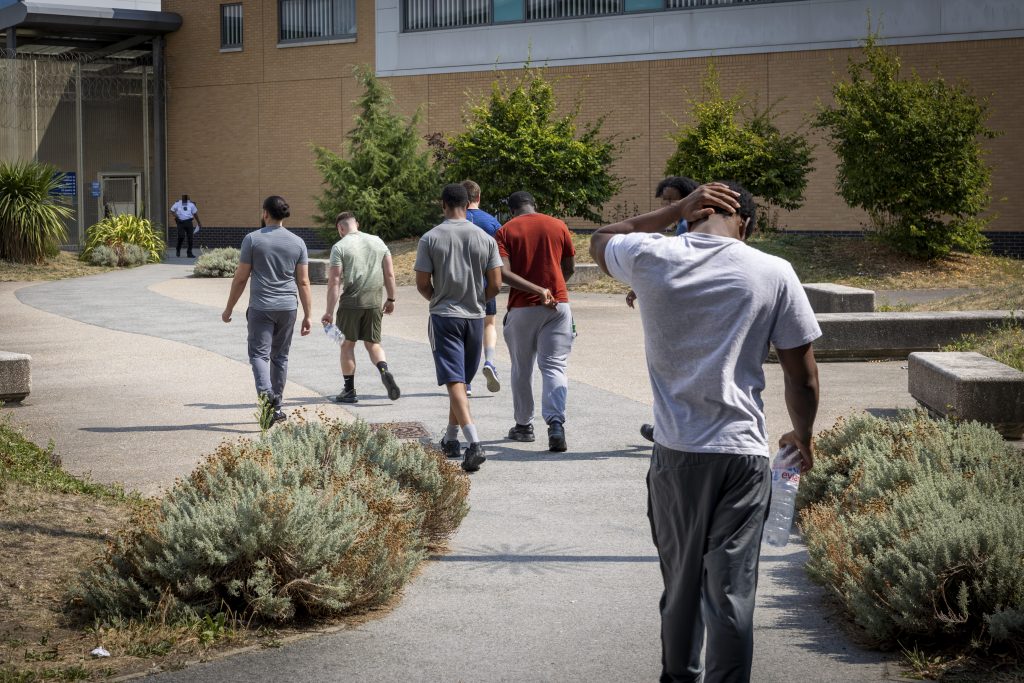
There are currently 10,324 young adults held in prisons in England and Wales, meaning they account for 12% of the total prison population.
While the overall population of young adults in prison has halved in the past 20 years, the number serving long prison sentences has increased markedly and continues to rise. In 2024, 50 individuals aged 18–20 entered custody to serve an indeterminate sentence, which is almost double the number recorded a decade earlier (30 individuals). By December 2025, 6% of those aged 18–20 years were serving life sentences, compared with 2% in December 2015. A further 6% were serving extended determinate sentences, and 17% were serving sentences of between two and four years—the most common standard determinate sentence length.
The report from the Prison Reform Trust’s National Lottery-funded Building Futures programme uncovers significant gaps in support for young adults serving long-term prison sentences. Authored by Dr Karen Graham and Claudia Vince, it warns that current approaches fail to meet the distinct developmental and wellbeing needs of this age group facing years or decades in custody.
Drawing on in-person consultations with 41 young adult men across four prisons in England and Wales—alongside written contributions and existing evidence—the report highlights how early experiences of care, trauma, exclusion, racism and other forms of multiple disadvantage shape young adults’ ability to cope with long-term imprisonment.
One participant who responded to the written consultation said:
“Age matters because whether you’re outside or inside you mature with age. The issue with maturing in prison is that it is harder to transition into a man and move forward, you’re still being treated the same as when you were younger by all staff, governors, policies so you feel stuck when trying to transition and you can’t just take yourself out of certain scenarios because you can’t leave your environment and the culture has been set in that environment.”
Many participants described feeling overwhelmed and disorientated upon receiving long sentences, often equal to or longer than their age. This has profound consequences for mental health, identity development and the ability to imagine a meaningful future.
On participant said:
“Being convicted at such a young age was heart-breaking—I would not come out of my room for months at a time, I’d barely be able to do the most basic things such as eat or shower. Also, the 23-hour COVID bang up didn’t help.”
The report’s recommendations include a dedicated prison policy for long-term prisoners, better training for staff working with young adults, and improved access to education and training, including the removal of restrictions on higher education funding for prisoners.
Commenting, Pia Sinha, chief executive of the Prison Reform Trust, said:
“This report shines a stark light on what it means to be a young adult facing decades behind bars. Too many young adults enter the system having already experienced trauma, instability and exclusion—and prison, instead of offering support and structure, often compounds these harms.
“For some young adults who commit serious offences, prison will be the appropriate punishment. But if the state imposes such lengthy sentences on young people, it also carries a responsibility to ensure they can grow, develop and ultimately build a life beyond the prison walls. Our findings show that with the right relationships, purposeful activity and an age-appropriate approach, young adults can adapt and progress. But without meaningful reform, we are setting them up to fail.
“This report is a call to government and prison leaders: young adulthood is a crucial developmental stage, and our prison system must recognise that. We owe these young people the chance not just to survive their sentence, but to build a future after it.”
Key Findings
Most young adults entering long-term custody have experienced prior state intervention, including care, alternative education and youth justice involvement.
“I was kicked out of school early (Year 7). I was hanging around on the estate instead of going to school, I was then sent to another school [through a managed move] and then went to a PRU (Pupil Referral Unit).101 I didn’t even finish the induction at the PRU”.
“I was 14 years of age when I got my very first custodial sentence! However, I was kicked out of home at 11 years of age and taken into local authority care. Therefore, I have been in some form of Government institution since then […] I am going to be 37 in Nov […] I got my IPP sentence at just turned 21 back in January 2007. I have remained incarcerated ever since” (response to written consultation)
Trauma, exclusion and racism were recurring themes shaping young adults’ relationships with staff, peers and the wider prison environment.
“Being in prison at such a young age [18], sentenced to such a long time was difficult to say the least. To begin with, I didn’t understand much about life in prison or the seriousness and impact my sentence and conviction would have on me. Furthermore, I could barely understand some of the things that were discussed at my trial, but to understand the impact this would have on my life, I’m still struggling with.” (response to written consultation)
“They see a group of black boys with dreads or plaits and just instantly judge us.”
Gaps in purposeful activity, neurodiversity support and trauma informed practice significantly undermine wellbeing and progression.
“I’ve been in jail six years; I’ve been asking to do an engineering course since I came in. I’ve never had an induction and never been to education.”
“Given how ill-equipped, unfit for purpose the whole system is, with one size fits all approach that fails to take in any factor properly, means that adjusting/coping with a long-term sentence becomes impossible, especially given the massive disparity between prisons and inconsistencies and lack of consistency even in prisons within the same category and the same in lower category. The only thing in common is nothing and plenty of it, so if you ‘adapt’ to one approach/regime/facilities at one prison, on transfer it will be completely different and turn your life upside down and back to square one, unsettled, no routine etc. […] The prison system is not equipped to hold different ages and does not cater for them, but it’s not just age not catered for, sentence length, race, religion, many things are not catered for.” (response to written consultation)
Positive relationships, meaningful family contact and access to mentors can play a decisive role in helping young adults adapt and develop over the course of long sentences.
“I wasn’t bothered about me, but I got two girls.”
“My way of coping is I don’t think about anything. I’m not living in here, I’m just existing. My life is with my children and family.” (response to written consultation)
With the number of young adults serving long sentences continuing to rise, the report calls for a clear strategic approach across His Majesty’s Prison and Probation Service (HMPPS), including age specific provision and trauma-informed practice to ensure young people can survive custody and build a future beyond it.
Recommendations
The report sets out a detailed set of reforms, including:
- A dedicated HMPPS policy framework for long-term prisoners. Recognising the distinct needs associated with different life stages, including risk, progression, family contact and purposeful activity.
- Age- and trauma-informed training for all staff working with young adult prisoners informed training for all staff working with young adult prisoners. Training should reflect the common life experiences of this cohort—including trauma, care history, exclusion and racism—and strengthen staff’s racial literacy, cultural competence and ability to work with neurodiverse individuals.
- A ‘staged’ approach to sentence management. Young adults should have individualised plans with achievable goals and genuine opportunities for progression throughout the sentence.
- Improved access to meaningful education and training. A review of prison education contracts to ensure provision reflects young adults’ neurological and developmental needs, including more creative, vocational and therapeutic opportunities.
- A ‘Partners in Progress’ strategy. Strengthening the role of mentoring, peer support and community based relationships for young adults serving long sentences.
- Alternatives to conflict management based on separation (‘keep aparts’). Prisons should explore proven approaches to conflict resolution and facilitate safer, more constructive regimes.
- Greater access to facilities that support healthy coping and identity formation. Including reliable access to self cook areas, exercise facilities and other resources that build autonomy and emotional wellbeing.
- Removal of restrictions on higher education funding. Young people should not have to wait years before accessing life changing study opportunities.
- Prioritising meaningful contact with family, partners and supportive figures. Including affordable digital communication, expanded visit provision and recognition of non-biological family networks.
- Structured opportunities for young adults to contribute to decisions affecting their lives in custody. Ensuring their insights shape policy and practice through meaningful consultation and clear feedback loops.
Notes
* HM Prison and Probation Service policy and practice increasingly recognises that brain development and maturation take place up to the age of 25. Yet most data sources currently report on young adults aged 18–24. Furthermore, some data only reports on the 18–20-year-old cohort. For purposes of this report, therefore, unless otherwise stated, young adults are defined as 18–24-year-olds.
